


Warm Compress vs Modern Dry Eye Treatments: What Works Best?

One of the most frequent causes of visiting eye clinics today is dry eye disease. Initially the symptoms are mild but as time goes on, they can interfere with daily activities like reading, driving etc.
Most patients try home remedies initially. Warm compresses are often suggested as an initial treatment of dry eye.
Home remedies may provide only temporary relief, and in some cases, symptoms can worsen over time. That’s why early intervention is important to identify the root cause and prevent dry eye disease from progressing.
Refine Dry Eye Center offers modern treatments that cure the cause of the disorder.

What Is a Dry Eye?
Dry eye is a condition caused by deficiency of tears or rapid evaporation of tears. Tears are important in making the eye surface smooth and comfortable, as well as healthy.
Warm Compress Therapy
What Is a Warm Compress?

A warm compress is a home-based treatment to relieve the signs of dry eye. It involves the application of a warm cloth to closed eyelids for 10 minutes.
The heat helps in the softening of thickened oils trapped in the meibomian glands.
Warm compress therapy is indicated for:
Mild dry eye
Meibomian gland dysfunction
Blepharitis
Early eyelid gland blockage
Benefits of Warm Compress Therapy
Warm compresses have advantages such as:
Easy to do at home
Low cost
Non-invasive
Helpful for mild symptoms
Limitations of Warm Compress Therapy
Warm compresses do not ensure a complete solution in all cases.
Inconsistent Heat
Most warm compresses lose heat quickly. The heat may not be high enough to effectively melt gland secretions.
Limited Gland Expression
Warm compresses may soften oils, but they cannot clear severely blocked glands.
Temporary Relief
Symptoms may recur unless inflammation or gland dysfunction is treated.
Modern treatments focus on addressing the root cause of dry eye, ensuring long-term relief and preventing recurrence.
Modern Dry Eye Treatments

Modern treatments focus on addressing the causes of the disease. These treatments are more profound and long-lasting as compared to the home remedies.
These non-invasive, in-office procedures are designed to treat the underlying cause before considering surgical options.
1. Intense Pulsed Light (IPL) Therapy
What Is IPL?

Intense Pulsed Light treatment is used on the eyelids area on the skin. IPL, which was originally used in dermatology, has proven to be a useful treatment for dry eye disease.
2. TearCare Therapy

What Is TearCare?
TearCare is a novel therapy that is employed to enhance malfunctioning of meibomian glands.
It applies uniform therapeutic heat (45degC) to the eyelids with the help of wearable SmartLids. This heat hardened oils and these oils are then squeezed out by hand by the doctor so as to enhance the functioning of the glands.
Benefits of TearCare
TearCare has several advantages compared to traditional warm compresses:
Provides consistent and controlled heating
Targets blocked glands more effectively
Allows natural blinking during treatment
3. Low-Level Light Therapy (LLLT)
Low-level light therapy is a painless and non-invasive treatment of dry eyes. The therapy is aimed at dealing with dysfunction of the meibomian glands in order to reduce inflammation and enhance oil production.

This therapy helps to:
Enhance eyelid gland function
Reduce chronic inflammation
Promote tissue repair
4. Advanced Dry Eye Prescription Medications
Advanced prescription drugs may be necessary in patients who have inflammatory dry eyes. Doctors can provide medications that make people produce more tears or decrease inflammation.

Treatment consists of standard treatment which includes:
Eye drops of cyclosporine: Enhances the manufacture of tears naturally and lowers inflammation.
Lifitegrast eye drops: Reduce inflammation and discomfort.
Perfluorohexyloctane:Anti-evaporative eye drops creating a protective coating.
Varenicline nasal spray: Promotes production of tears.
Autologous serum tears: Customized drops of the own blood of the patient in case of severe cases.
Punctal plugs: Small pieces put into tear ducts in order to keep the eyes moist.
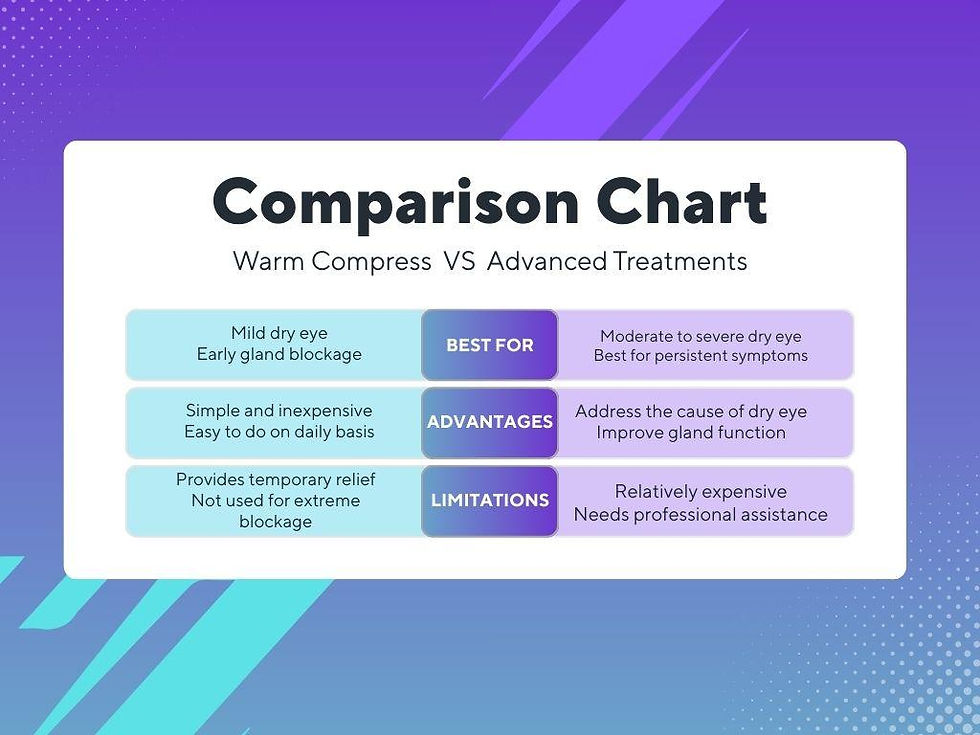
Comparison of Warm Compress and Advanced Treatment
The awareness of the difference between these approaches helps patients choose the most effective option.
FAQs
Is a warm compress helpful for dry eyes?
Yes, it helps in mild cases. Heat softens blocked oils in the glands and improves tear quality, but the relief may be temporary.
How often should you use a warm compress?
Use it for 10 minutes, once or twice daily for best results.
Are modern dry eye treatments safe?
Yes, when done by an eye specialist including an optometrist. Treatments like IPL, TearCare, and punctal plugs are generally safe and effective.
Is dry eye permanently curable?
Dry eye is usually long-term, but symptoms can be well controlled with the right treatment.
What lifestyle changes help dry eyes?
Stay hydrated, keep eyelids clean, avoid rubbing your eyes, and use a humidifier in dry environments.


